

Sugar is a common part of daily life, but excessive intake can silently damage your health. Below are the key signs that you’re eating too much sugar—and how to fix it.
1. The Hidden Dangers of Excess Sugar
Many people underestimate the harm of too much sugar. It’s not just about weight gain—excess sugar triggers inflammation, accelerates aging, damages gut health, and even increases the risk of chronic diseases like diabetes and heart disease. Unlike natural sugars in fruits/veggies, added sugars (in processed foods, sugary drinks) are empty calories that offer no nutritional value.

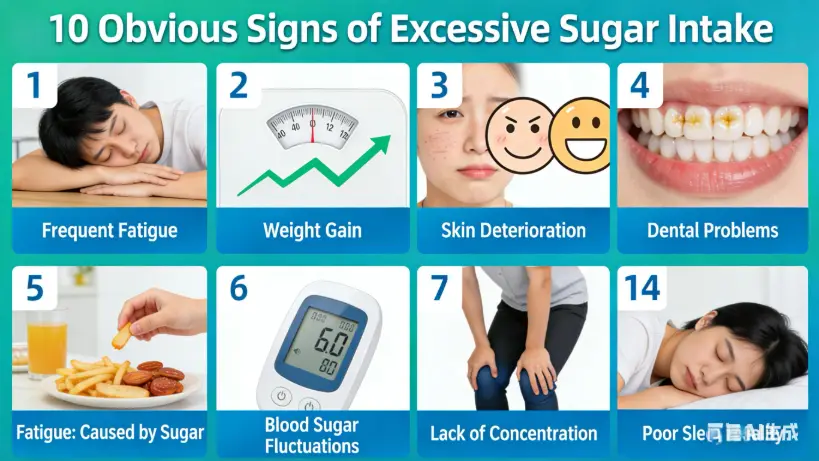
2. 10 Obvious Signs You’re Eating Too Much Sugar
- 1. Dull Taste Buds —— After getting used to high-sugar foods, you will lose interest in light natural foods (such as vegetables and plain grains), always feel that the taste is too weak, and must eat sweet foods to satisfy your taste buds.
- 2. Deteriorating Skin Condition —— Frequent acne, rough and dull skin, and even fine lines and dark spots. This is because sugar damages skin collagen and accelerates skin aging.
- 3. Frequent Bloating and Indigestion —— Sugar disrupts the balance of intestinal flora, leading to an increase in harmful bacteria, slowing down intestinal peristalsis, and often causing discomfort such as bloating and excessive gas.
- 4. Fluctuating Energy Levels —— You will feel temporarily excited after eating sweets, but soon feel tired, sleepy, and unable to concentrate. This is a typical sign of rapid blood sugar rise and fall.
- 5. Sensitive Teeth and Easy Tooth Decay —— Oral bacteria use sugar to produce acidic substances that corrode tooth enamel, leading to sensitive teeth, tooth decay, and even gum bleeding.
- 6. Unexpected Weight Gain —— Especially obvious accumulation of abdominal fat. Even if you don’t eat too many staple foods, you are prone to gaining weight. This is a sign that sugar is converted into fat and stored.
- 7. Frequent Thirst, Even After Drinking a Lot of Water —— High sugar intake puts the body in a dehydrated state. Even if you drink a lot of water, you still feel dry in the mouth and throat.
- 8. Mood Swings —— Prone to irritability, anxiety, and anger, especially when you don’t eat sweets. This is emotional instability caused by sugar dependence.
- 9. Decreased Immunity —— Frequent colds, fevers, and slow wound healing. Because excessive sugar inhibits the activity of immune cells, reducing the body’s resistance.
- 10. Poor Sleep Quality —— Difficulty falling asleep, easy waking up at night, or light sleep. This is because sugar affects the secretion of melatonin and disrupts the biological clock.
3. How to Reduce Sugar Intake and Improve Your Health
To improve the above discomfort, the key is to reduce added sugar intake. Start with your daily diet—it’s simple and easy to operate, no need for deliberate dieting:
- Eat less processed foods, such as cakes, biscuits, sugary drinks, and salad dressings—these are major sources of hidden sugar.
- Eat more foods rich in dietary fiber, such as vegetables, whole grains, and beans, to help stabilize blood sugar and promote intestinal peristalsis.
- Drink more water, replace milk tea, fruit juice, and carbonated drinks with boiled water to reduce sugar intake.
- Add less sugar when cooking, gradually adapt to a light taste, and let your taste buds slowly recover their sensitivity.

Reducing sugar intake is not an overnight process. Adjust your diet step by step, and your body will gradually recover, and the above discomfort will be relieved.